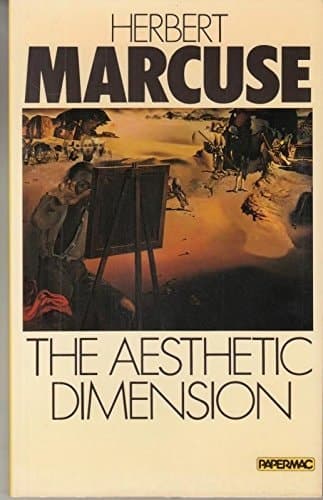
The Aesthetic Dimension Toward a Critique of Marxist Aesthetics
Description
The Aesthetic Dimension is a response to previous writings within critical theory on the subject of art, notably those of Walter Benjamin and Theodor Adorno. Marcuse rejected Benjamin's call in "The Work of Art in the Age of Mechanical Reproduction" for the politicization (i.e., a literal reflection of perceived political realities) of modern, reproducible art both to reflect the state of a society and to incite change. Like both Benjamin and Adorno, Marcuse believed that art promises resistance to societal repression, and that a cultural revolution is necessarily connected to a political or social revolution. Adorno (as represented mainly by his posthumous Aesthetic Theory) and Marcuse agreed that this possibility must be realized through artistic detachment and symbolism. Marcuse however offered a more inclusive and less radical suggestion for modern art's source of power than did Adorno, who believed that the works of high culture were the sole artistic source of potential emancipation.
Keywords
PhilosophyAesthetics
1979Book
Author(s)Erica Sherover-Marcuse, Herbert Marcuse
PublisherMacmillan
ISBN9780333266748
LanguageEnglish