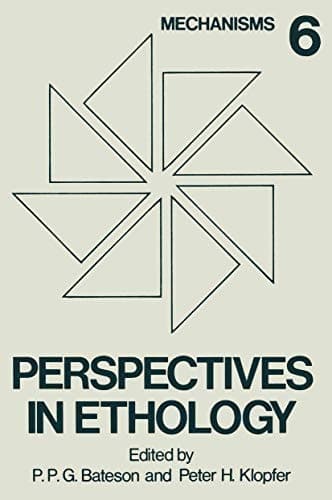
Ontogeny (Perspectives in Ethology)
Description
1 Preformation and Epigenesis in the Origins of the Nervous System and Issues, Concepts, and Their History.- I. Abstract.- II. Introduction.- III. Preformation and Epigenesis in the 18th Century.- IV. Preformation and Epigenesis in the 19th Century.- V. Recapitulation Theory and Embryology.- VI. Neopreformation, Neoepigenesis, and the Birth of Experimental Embryology.- VII. Roux's Contribution to the "Heredity-Environment" Question.- VIII. Weismann and the Role of the Environment in Development.- IX. Preformation and A Final Resolution of Opposing Views (1900).- X. Genetics, Eugenics, and Origins and Early Influences until 1910.- XI. Mendelian Genetics, Eugenics, and Implications for Neurobehavioral Development (1910-1920).- XII. The Anti-instinct Movement and the Issue of Heredity vs. Environment (1920-1940).- XIII. A. Gesell, Infant Development, and the Issue of Maturation vs. A New Twist to the Heredity-Environment Controversy.- XIV. Neuroembryology and the Embryonic Origins of Behavior.- XV. Conclusions and Summary.- XVI. Acknowledgments.- XVII. References.- 2 A Reformulation of the Idea of Maturation.- I. Abstract.- II. Introduction.- III. Maturation as a Dichotomous Concept.- A. Traditional Oppositions.- B. "Genetic Détermination" and the Analytical Mode.- IV. Coaction in Ontogenesis.- A. The Genetic Code.- B. Species Typicality.- C. Developmental A Link between Phylogeny and Ontogeny.- V. Maturation as Species-Typical Developmental Systems.- VI. Conclusion.- VII. Acknowledgment.- VIII. References.- 3 Toward A General Theoretical Framework for Ethology.- I. Abstract.- II. Introduction.- III. Background.- A. The Determinants of Behavior.- B. Requirements of an Ethological Framework.- IV. Framework for Ontogeny.- A. Analysis of Behavioral Control.- B. Analysis of Changes in Control.- C. Final Notes on the Framework.- V. Notes on the Remaining Framework for Ethology.- A. Perpetuation.- B. Phylogeny.- VI. Overview.- VII. Acknowledgments.- VIII. References.- 4 A New Perspective on Some old Ideas Frederick.- I. Abstract.- II. Introduction.- A. Background.- B. Incentives and Motivation.- C. Incentives, Cognition, and Cognitive Factors.- III. Motivational Systems.- A. Introduction.- B. Elicitation of Ingestive Behavior.- C. Temperature-Regulating Behavior.- D. Conspecifics as Incentives.- IV. How Does Motivation Develop?.- A. Introduction.- B. Incentive Motivation.- C. Conspecifics and Incentives.- D. From Suckling to Independent Feeding.- V. Motivation, Learning, and Goal-Directed Activities.- VI. Competition.- VII. Foraging.- VIII. Conclusion.- IX. Acknowledgments.- X. References.- 5 Problems in Animal Perception and Learning and their Implications for Models of Imprinting.- I. Abstract.- II. The Internal Representation as an Explanation of Imprinting.- III. Recognition and the Organization of Behavior.- A. The Neurophysiology of Perception.- B. Perception and Behavioral Control.- C. The Context of Recognition in the Imprinted Bird.- IV. The Acquisition and Organization of a Representation.- A. The Cognitive Approach to Conditioning.- B. Conditioning and Spatial Representation.- C. The Representation of an Imprinted Object.- V. Conclusions.- VI. Acknowledgments.- VII. References.- 6 Ontogeny of Learning.- I. Abstract.- II. Introduction.- III. The Comparative Analysis of Learning.- A. Traditional Psychological and Ethological Premises.- B. The Paradigm Crisis in Learning.- C. Taste-Aversion Learning and Autoshape Learning.- D. Taste-Aversion General or Unique Process?.- IV. The Psychological Analysis of Common Comparative and Ontogenetic Research Strategies.- A. Introduction.- B. Phylogenetic and Ontogenetic Scales of Learning.- C. General Principle Analysis of Learning.- D. The Behavioral Process Analysis of Learning.- V. Associative Recent Formulations.- A. Introduction.- B. Cognitive View of Conditioning.- C. A
Keywords
ONTOGENY
1982Book
Author(s)Peter H. Klopfer, P. P. G. Bateson
PublisherSpringer
ISBN9780306410635
LanguageEnglish