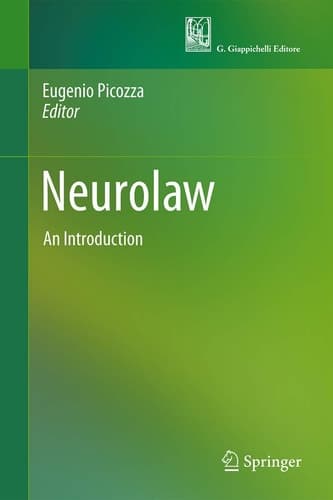
NEUROLAW AN INTRODUCTION
Description
This book introduces readers to the basic principles of the field of neuroscience, which are commonly referred to as Neurolaw. First, it illustrates the relationship between neuroscience, the natural sciences and social sciences. Furthermore, it highlights numerous problems concerning the fundamental philosophical concepts employed by Neurolaw and assesses the validity of the method and the limits of pursuing a neuroscientific approach to problems of law and justice. The book explores the feasibility of applying these concepts to the fundamentals of the general theory of law and legal dogmatics, while also examining the main problems of Neurolaw in relation to public, private, criminal and procedural law. Employing a systematic approach and methodology, the book offers members of the general public and legal experts alike a valuable and insightful introduction to Neurolaw.
Keywords
LawReferenceMedicalNeurosciencePhilosophyScienceLife SciencesMedical Law & LegislationJurisprudence
2016Book
Author(s)Eugenio Picozza
PublisherSpringer International Publishing
ISBN9783319414409
LanguageEnglish