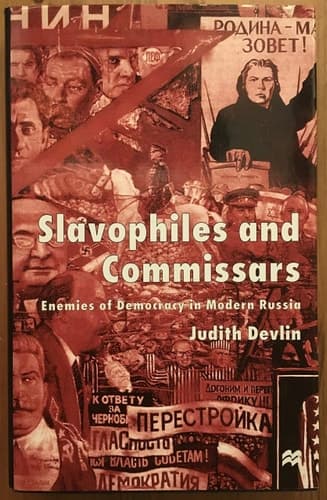
Slavophiles and Commissars Enemies of Democracy in Modern Russia
Description
This work examines contemporary Russian nationalism as it re-emerged in the wake of Gorbachev's liberalization. The first part of the book analyzes the ideology of authoritarian nationalism, as it was developed by the conservative intelligentsia, while the second section examines its political impact from 1987 to the presidential elections of 1996. The book argues that the new nationalism provided opponents of reform with an apparently novel justification for their hostility to the liberalization inaugurated by Gorbachev and erratically pursued by Yeltsin.
Keywords
Politics & Social SciencesPolitics & GovernmentIdeologies & DoctrinesPolitical ScienceUnited States