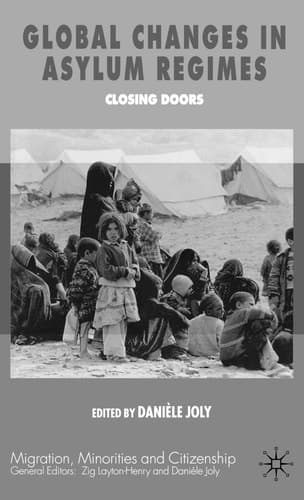
Global Changes in Asylum Regimes
Description
Through the examination of key issues and regional studies this book argues that asylum regimes throughout the world display convergent trends. It links human rights and asylum and explodes the myth of international protection. It analyses temporary protection based on the European model. The author draws lessons from international protection in Kosovo and evaluates European Union harmonization initiatives. This study stresses the role of refugees as social actors and develops the complexity of gender and refugee women's issues. It maps out theoretical and policy issues relating to return in Africa and explores the relationship between asylum law and liberal governance; and it demonstrates the changing role of human rights organizations. (adapted from publisher's abstract).
Keywords
Political ScienceCivil RightsInternational RelationsSocial ScienceEmigration & Immigration
2002Book
Author(s)Daniele Joly
PublisherPalgrave Macmillan
ISBN9780333913208
LanguageEnglish