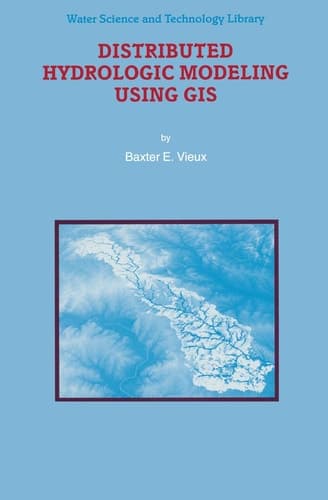
Distributed Hydrologic Modeling Using GIS (Water Science and Technology Library)
Description
This monograph provides a unified approach to distributed parameter hydrologic modelling using Geographic Information Systems (GIS). Logic models that can utilize the information content of global digital datasets offer tantalizing prospects for improved simulation of surface runoff processes. As data from newly deployed remote sensing platforms come online, hydrologic modelling techniques must keep pace with such high-resolution data. As soon as we embark on simulating hydrologic processes using these digital datasets with GIS, we must address the issues that are the subject of this book, which are the spatial and temporal characteristics of radar rainfall (NEXRAD), topography, soils, and land use/cover. Distributed modelling is demonstrated through case studies and an appendix that sets forth model results using Arc.water.fea. Comparison of model results with observed flood events demonstrates the importance of incorporating spatial variability into model parameters affecting the transformation of precipitation into surface runoff at the river basin scale.
Keywords
HYDROLOGIC CYCLEGEOGRAPHIC INFORMATION SYSTEMSHYDROLOGY_DATA PROCESSINGELECTRONIC DATA PROCESSING_DISTRIBUTED PROCESSING
2001Book
Author(s)Baxter E. Vieux
PublisherKluwer Academic Pub
ISBN9780792370024
LanguageEnglish