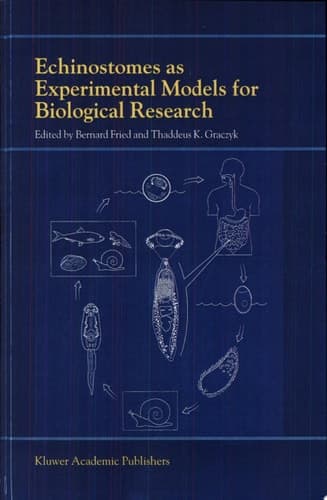
Echinostomes as Experimental Models for Biological Research
Description
Echinostomes are ubiquitous intestinal flatworm parasites of vertebrates, and are important in human and veterinary medicine and wildlife diseases. They are also very good models for biology experiments because they are easy and inexpensive to maintain in adult and larval worm stages, and of course are unlikely to draw the attention of animal rights advocates. They have been used for decades for research, but practical information on such use has not been compiled in a single reference before. They have been used in experiments in excystation and in-vitro cultivation, larval and adult parasite-host relationships, reproductive behavior, various aspects of host-parasite recognition and interactions, and other concerns at all levels from molecular to organismic. The topics include biology; systematics; maintenance, cultivation, and excystation; behavioral biology; reproductive physiology and behavior; physiology and biochemistry; and immunobiology and immunodiagnosis.
Keywords
MedicalDiseasesInfectious DiseasesTropical MedicineParasitologyScienceLife SciencesBiologyExperiments & ProjectsResearch & MethodologyMicrobiologyAnatomy & PhysiologyZoology
2000Book
Author(s)Bernard Fried
PublisherSpringer Science & Business Media
ISBN9780792361565
LanguageEnglish